Every project tells a story. At LASAR, those stories usually involve hard problems solved, crews kept safe and pride in a job done right. Here are a few recent projects, written up as case studies to show the scope, the challenges and how we handled them.
BNSF Protect in Place Project
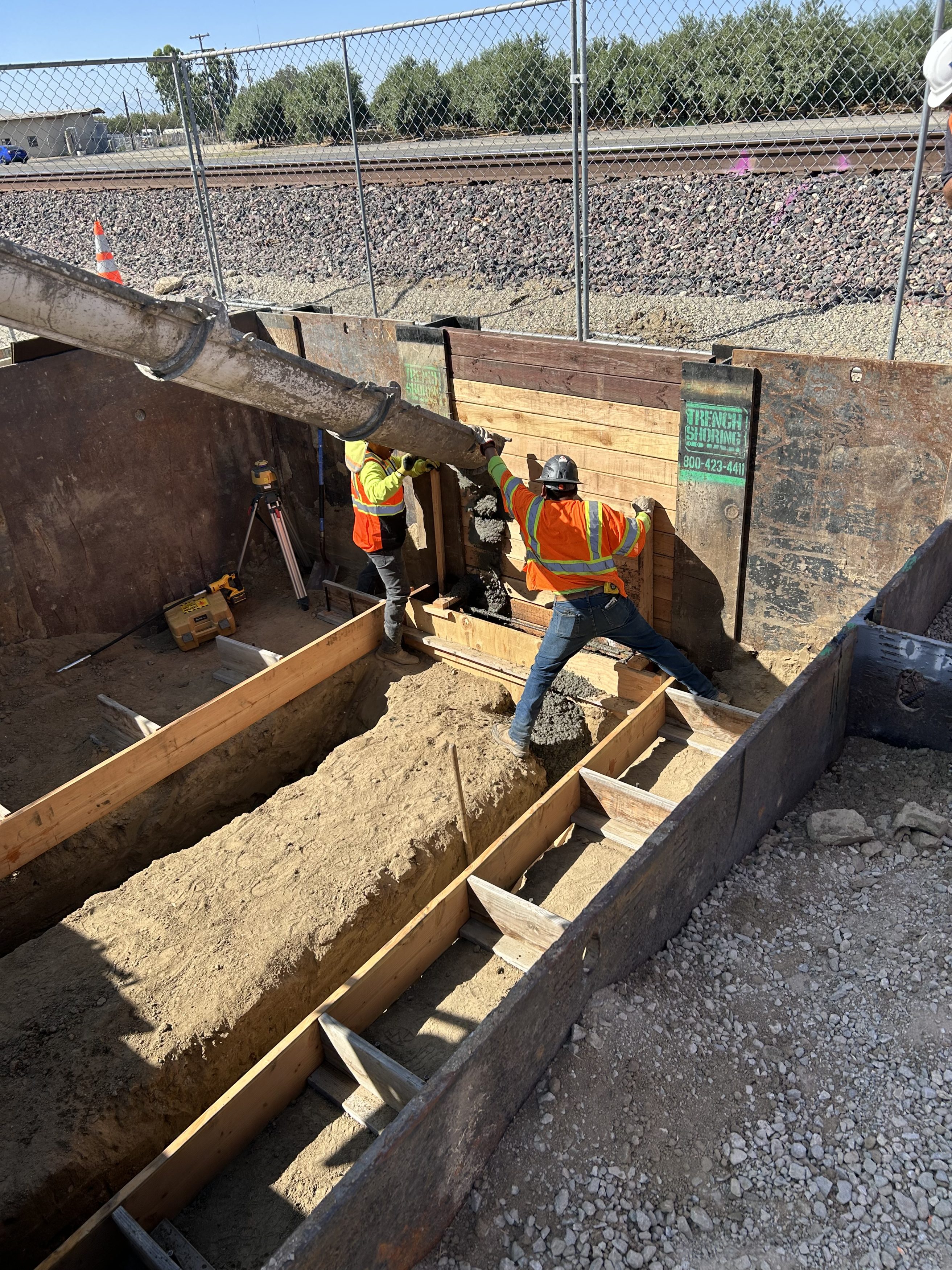
At the California High-Speed Rail Authority’s Rail Material Depot near Kimberlina, between Wasco and Delano, LASAR performed protect-in-place work for existing underground utilities within a BNSF crossing. The work was inside a rail-controlled area, and the existing utilities had to stay in place and undamaged while construction went on around them.
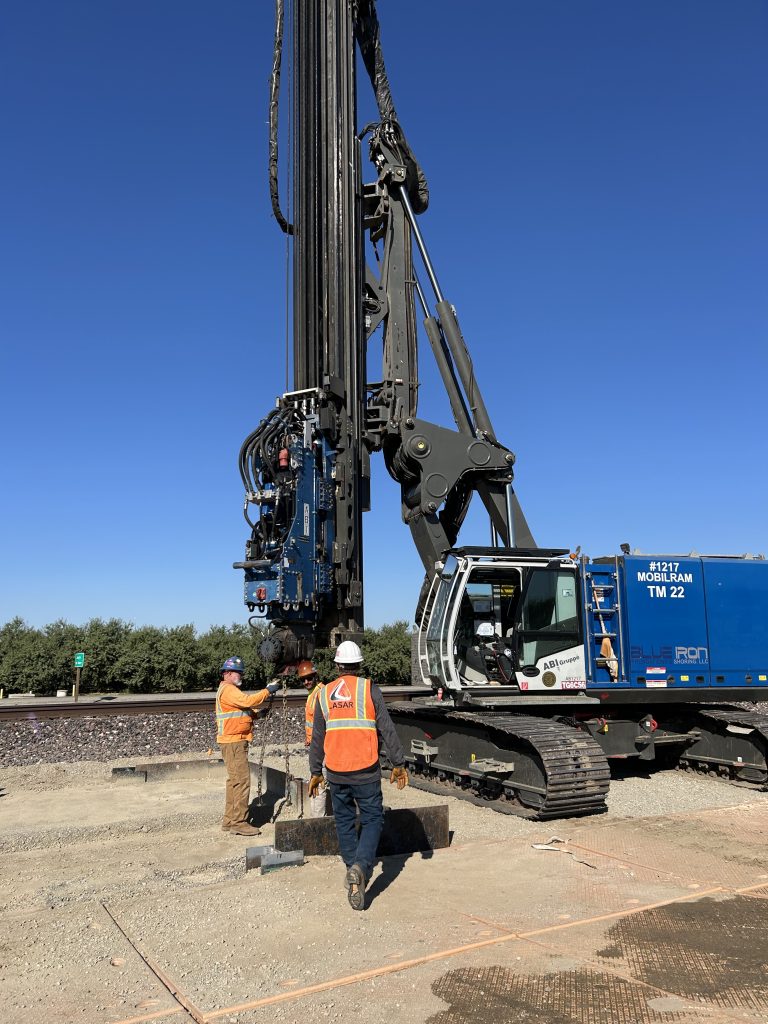
The shoring requirements drove the means and methods. Work inside the BNSF right-of-way and within 15 feet of track centerline required engineered shoring designed for Cooper E80 loading, the railroad live-load standard used to account for heavy freight surcharge conditions. The excavation support system had to be designed and installed to protect the track structure, the underground facilities, and the crews working below.
To complete the work, LASAR mobilized a specialty piling rig equipped with a vibratory hammer and predrilling capability. The hammer allowed controlled startup and shutdown during pile installation, which kept vibration down near the buried utilities and the active rail.
Project Details
Rail Authority: BNSF Railway, Bakersfield Subdivision
Project: CHSRA Rail Material Depot
Scope: Protect-in-place of existing underground infrastructure within BNSF right-of-way
Shoring Requirement: Engineered excavation support designed for Cooper E80 rail loading
Specialty Equipment: Piling rig with vibratory hammer and predrilling capability
Concrete Mix Design: 8.25-sack mix, 0.30 water-to-cement ratio, 3,000 PSI at 24 hours, on-site accelerator dosing
California Middle-Mile Broadband Initiative
Most of our middle-mile work has run the spine of the Central Valley, from Salida down to Fresno. Rural stretches where the route ducks under farm roads and irrigation canals. Urban segments where it threads between gas, water, sewer, and existing telecom in dense corridors. Public right-of-way one mile, private easement the next.
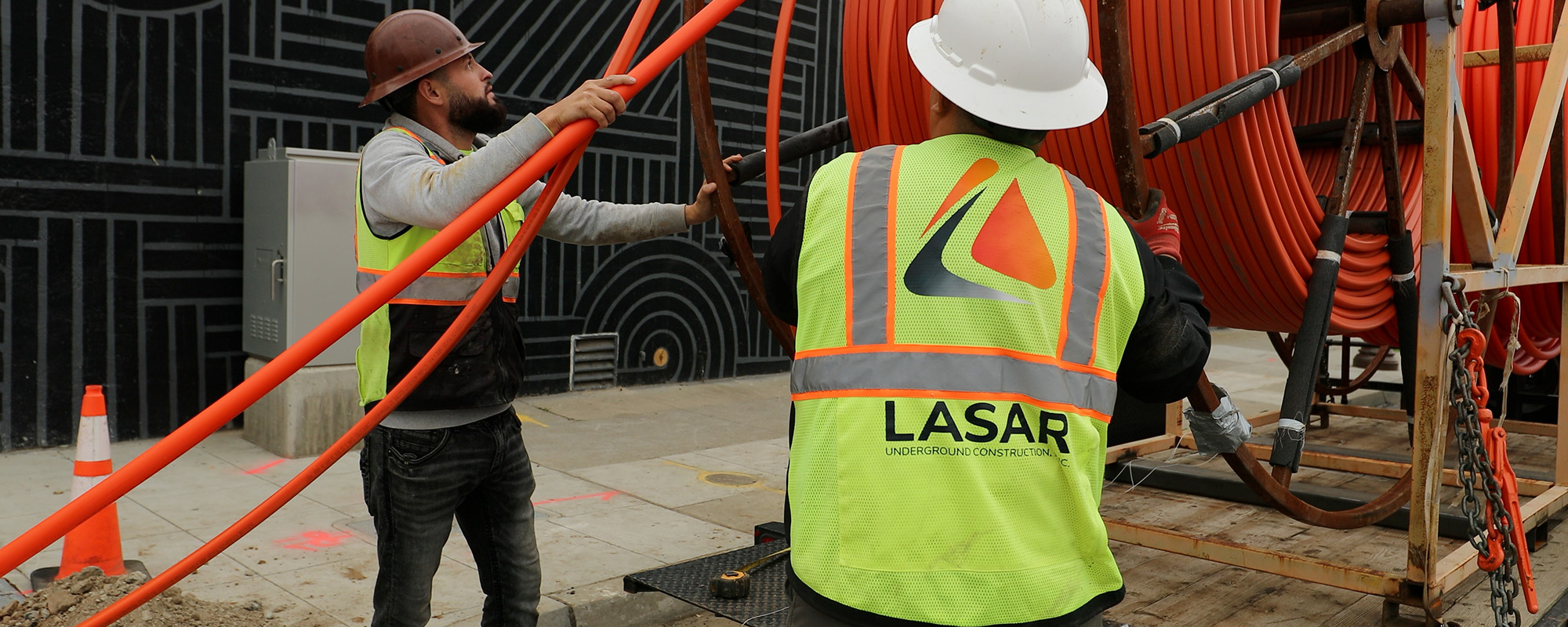
What we self-perform on these builds runs the full OSP civil scope. Open-cut trench and direct-buried conduit. HDD for road crossings, canal crossings, and any zone where surface disruption isn’t an option. Handhole, manhole, vault, and splice point placement with grade adjustments. Vacuum and hydro excavation to daylight existing utilities before we go in. Class C-31 traffic control under our own license, plus the multi-jurisdictional permitting that comes with crossing a city, a county, and Caltrans right-of-way inside the same week.
California High-Speed Rail, Utility Relocation Fresno to Bakersfield
On California High-Speed Rail Construction Package 2-3, LASAR performed telecom and fiber utility relocations across the Fresno-to-Bakersfield alignment through Fresno, Kings, and Tulare counties. What began as a single AT&T relocation at Elkhorn and Clovis Avenues grew into eight named relocation segments involving AT&T, Frontier, and CVIN infrastructure.
The corridor crossed a part of the Central Valley already full of underground and overhead utility conflicts. Copper, fiber, irrigation crossings, county roads, rail facilities, poles, anchors, and existing easements all had to be dealt with before the new rail alignment could move forward. LASAR used the method each segment required: open-cut conduit duct banks where the route was clear, jack-and-bore installations with steel casing where utilities crossed the high-speed rail right-of-way, and horizontal directional drilling where open excavation was not practical.
The work spread across three counties and required coordination with utility owners, county public works departments, rail authorities, state agencies, and local irrigation districts. LASAR pulled the road encroachment permits under its own A-license and held the Cal-OSHA T1 trenching permit covering the work.
Project Details
Owner: California High-Speed Rail Authority
Counties: Fresno, Kings, and Tulare
Scope: Telecom and fiber utility relocations across eight named segments
Utility Infrastructure: AT&T, Frontier, and CVIN
Methods: Open-cut conduit duct banks, jack-and-bore steel casing, horizontal directional drilling